
Prvních 48 hodin: Moc, kterou jsme odevzdali systému: Oleg Vojtíšek, Olga Nešporová, Magdalena Ondrová, Barbora Steinlauf
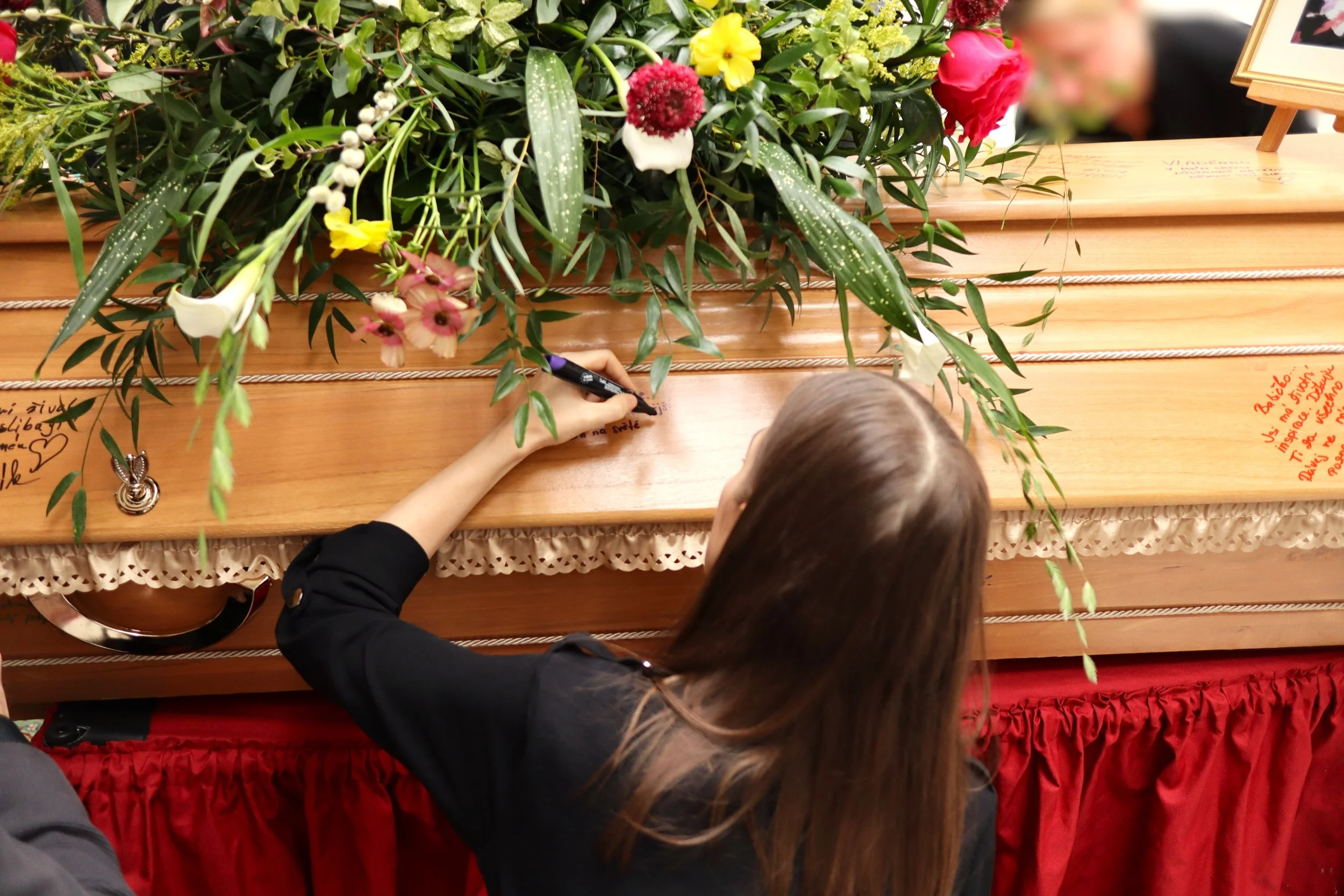
Na pohřbu můžeme napsat vzkazy na rakev.
Tatínek umřel. A teď rychle: zavolat lékaře, na internetu najít nejbližší pohřební službu, ať si ho co nejrychleji vyzvednou. Hned ráno jít sjednat pohřeb do kanceláře na pobočku, kterou stihnu ideálně ještě před prací. Naobjednat věnce, sestavit parte, vybrat rakev z katalogu. Tak vypadá nejklasičtějších 48 hodin od úmrtí.
Olga Nešporová, etnoložka z AV ČR, o tom konstatuje: “Lidé přestali být na péči o umírající zvyklí. Nevíme, co si s mrtvým počít, a bojíme se jeho tělesnosti a případných změn.”
Mrtvé lidské tělo ale není biologický odpad. Jak hezky říká náš Oleg: “Mrtvý člověk už nedýchá, nekašle a nekýchá. Bakterie tam být mohou, ale milují našich živých 36 stupňů. Pokud jste se nebáli dotýkat za života, není důvod se odtahovat teď.” Prvních několik hodin od úmrtí patří vám a jemu, nikoli pohřebním zřízencům.
Magdalena Ondrová z hospice doplňuje příklady z praxe: v hospicích je normální, že sestřičky rodině pomohou tělo umýt, obléci a celkově připravit. Někdy rodina chce upravit vlasy, jindy jim dát něco se sebou na cestu. A někdo potřebuje třeba jen konzultace po telefonu, jak na to.
Všichni tři odborníci se tedy napříč obory shodnou na tom samém: bojíme se smrti a bojíme se mrtvého těla. Přitom nám ale jeho úprava může neskutečně pomoct. Zesnulý už je klidný, nic ho nebolí a máte ho plně v rukou. Ten klid se přenese i na vás, když mu dáte šanci. Rozloučit se, udělat mu poslední službu, naposledy se postarat. A teprve pak ho nechat jít.
Pokud se chcete o prvních 48 hodinách od úmrtí dozvědět více - na co máte právo a co vám nikdo nesmí zakazovat, čtěte rozhovor Kláry Nesitové s naším Olegem, ale také Olgou Nešporovou, Magdalenou Ondrovou nebo Barborou Steinlauf, zdravotnickou advokátkou.
Chcete, aby z vašeho těla vyrostl strom? A víte, že to u nás nejde? Ekonews o konferenci Společně za terramaci
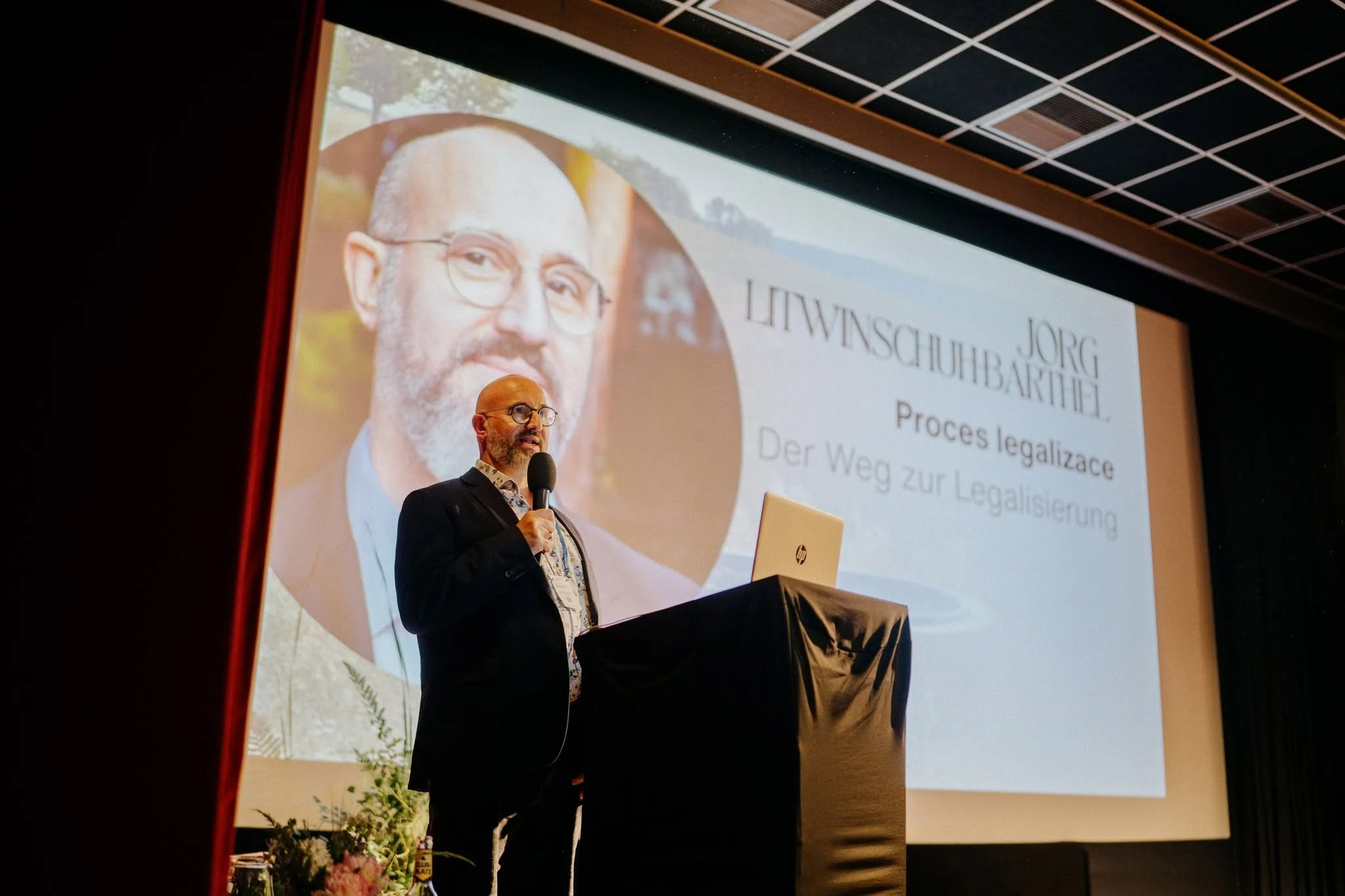
Jörg Litwinschuh-Barthel mluví o legalizaci terramace
Chcete, aby z vašeho těla vyrostl strom? A víte, že to u nás nejde?
Respektive, ne tak docela: u nás jakémukoli pohřbení ke stromu předchází kremace. Takže ke stromu se vsype jenom váš popel. A ten je vesměs z fosforu a vápníku, takže ten strom vás tam spíš tak strpí, než že byste mu pomohli růst.
(Vzácnějším případem jsou samozřejmě hřbitovy, kde někdo zasadil stromy a pak je nechal růst nazdařbůh tak moc, že jejich kořeny prorostly hroby. Nikdo se tam už sice nově pohřbít v rakvi nemůže, aniž by strom pokácel, ale je to takový důkaz, že to jde – když se (ne)chce!)
Jak to ale udělat, aby to skutečně šlo? Abyste se skutečně proměnili v prospěšný substrát, ze kterého vzejde strom? A jak to udělat v rámci desítek dní, když tělo normálně tleje klidně desítku let?
Tím se zabývala německá firma Meine Erde. Přišli s tzv. kolébkou, ve které se tělo zesnulého rozloží za 40 dní přirozenými procesy: vláhou, teplem a nepatrným pohybem. Po konci procesu vám zbude terramát – substrát, hlína, do které lze teoreticky zasadit strom.
Jenomže: i v tak pokrokovém Německu se tato hlína musí převézt na hřbitov a zakopat do hrobu, hezky několik metrů pod zem.
A teď ta zásadní otázka – dokážeme to i u nás?
Žádný pohřební ústav zatím nemá technologii (onu kolébku), aby to mohl provést. Ale my v tom nevidíme žádný problém: umíme zařídit převoz zesnulého do Německa, a potom zase převoz terramátu zpět k nám. O potřebnou administrativu se postaráme.
Jenomže, úplně ideální by to bylo bez převozů a bez problémů s naším zákonem. O to se snaží spolek Poslední stopa v čele s Adamem Vokáčem.
Vyjádření ministersta zní (mimojiné) takto: “Ekologická kritéria a mravní cítění se mohou značně rozcházet, přičemž v oblasti pohřbívání, nakládání s lidskými pozůstatky, je narušení mravního cítění veřejnosti posuzováno jako možný přestupek podle zákona o pohřebnictví.”
Tak co myslíte? Je to přestupek? Je to ekologický problém? Je to narušení mravního cítění veřejnosti tam, kde kremace takovýmto narušením podle ministerstva není?
Čtěte na Ekonews článek Ireny Buřívalové o konferenci, kterou pořádal Adam Vokáč se spolkem Poslední stopa a které se účastnil i náš Oleg Vojtíšek:
Oleg Vojtíšek: Pohřeb má pomáhat, ne škodit: Rozhovor v časopise Lidé a Země
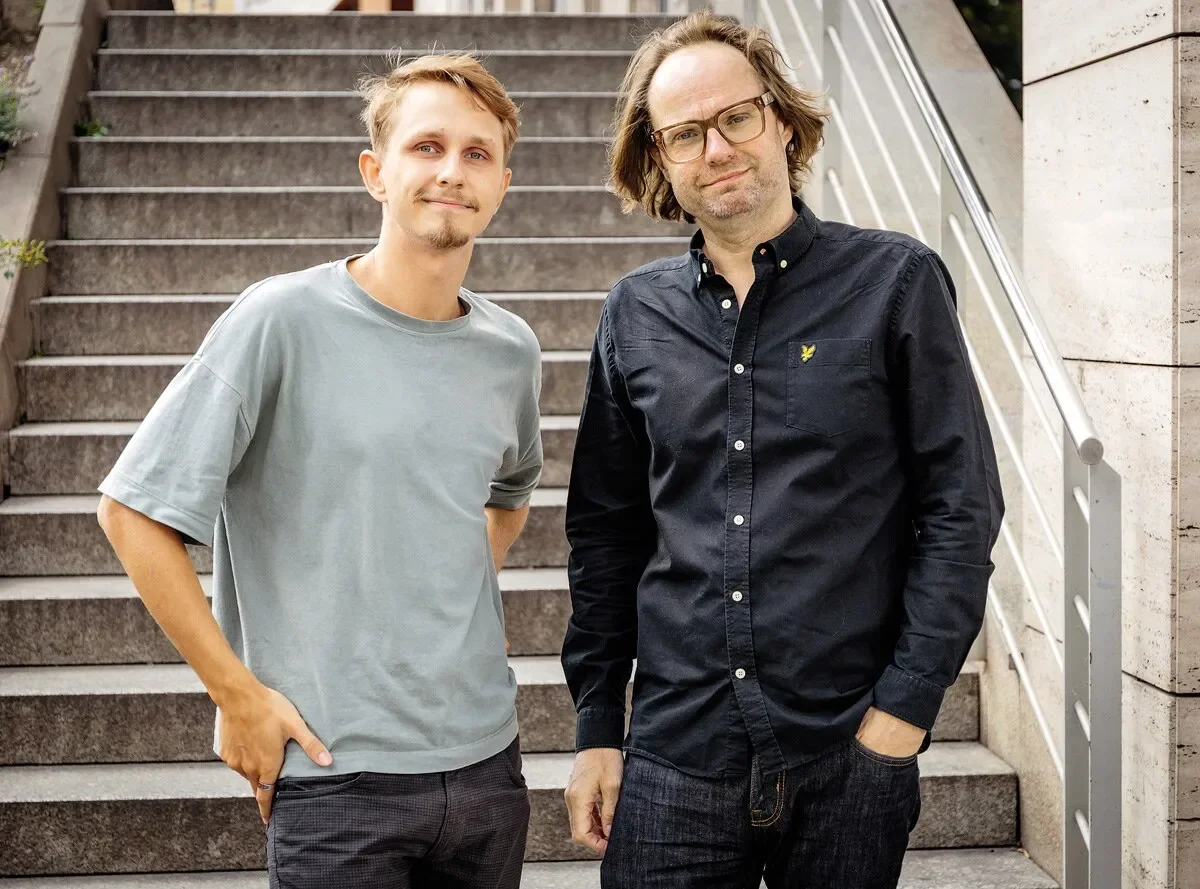
Oleg Vojtíšek a Adam Krecl, autor článku
Rozhovor plný otázek. A odpovědí.
Jaký máte vztah ke smrti? Předpokládám, že po všech zkušenostech strach nemáte.
Stojí za nápadem založení pohřební služby nějaká negativní zkušenost?
Ve vaší organizaci jsou naopak i mladé průvodkyně. Jak ony zvládají profesi, ve které věk hraje roli?
Co musí člověk umět ovládat, aby se stal pohřebním průvodcem?
Je smrt v české společnosti tabu, nebo se situace zlepšuje?
Máte nějakou zkušenost s pohřby v zahraničí?
Existuje nějaká země, jejíž pohřební rituály byste chtěli vidět na vlastní oči?
Kde tedy hledáte inspiraci pro formu pohřbů v Česku?
Daří se vám české smuteční rituály proměňovat?
Vaše webové stránky provází fráze „dobrý pohřeb“. Co znamená dobrý pohřeb?
To mi připomíná Mexiko, kde se věří, že zemřelí zůstávají mezi námi...
Při mých studiích sociální antropologie jsem narazil také na indický obřad sátí, při němž je vdova zesnulého rituálně upálena zaživa s jeho tělem. Viděl jste někdy něco podobného?
Můžete vy sám nějak pomoci pozůstalým s truchlením po pohřbu?
Lidé se dnes při velkých životních změnách často vydávají na poutě. Dokážete pozůstalým připravit i nějakou symbolickou cestu?
Zájemcům nabízíte také pohřbení v lesním hřbitově. Kde jste k tomuto nápadu přišel?
Proč bych se měl nechat pohřbít v lese místo klasického městského hřbitova?
Chodí za vámi lidé s žádostí o opakování pohřbu?
O jaké formy pohřbů je mezi pozůstalými největší zájem?
A zemřelí si tedy svůj pohřeb plánují dopředu sami?
Jaká část pohřbu je pro vás jakožto průvodce nejobtížnější?
Jak mohu sám sebe připravit na smrt?
Jak se nebát smrti? Je to jednodušší, než se zdá. Triky pro překonání strachu podle pohřebního průvodce
Strach ze smrti se dá zmírnit
Chcete vědět, jak vyzrát na smrt? Je to jednodušší, než si myslíte: Stačí ji přijmout. Dát jí akceptační pusu. To je náš tajný trik. Všechny ty úzkosti a ten blbej pocit, že nemáte věci pod kontrolou? Většina strachu ze smrti mizí, jakmile pochopíte a přijmete, že je prostě součástí balíčku jménem Život.
Náš Oleg Vojtíšek napsal článek pro Vlastu, kde se populárním a jednoduchým způsobem mluví třeba o tomto:
1. Mluvte o smrti
2. Pohřeb je váš poslední velký projek
3. Chcete klid? Promluvte si s profíky!
4. Zanechte vzkaz
5. Každoroční garanční prohlídka
6. Žijte den, jako by byl váš poslední
7. Smrt blízkého se dá nacvičit
Tak si jej přečtěte. Třeba vás inspiruje.
Smrt může být klidná a blažená, říká pohřební průvodkyně. S babičkou jsem se o smrti bavila
Pohřební průvodkyně Renata na lesním hřbitově
Smrt může být klidná a blažená, říká pohřební průvodkyně. S babičkou jsem se o smrti bavila
"Oslovil nás asi pětapadesátiletý terminálně nemocný muž a my spolu s ním a s jeho rodinou připravujeme závěr jeho života. Jsem s ním v kontaktu, píšu pro něho řeč, kterou on odsouhlasí. Je to úžasný příběh. Když jsem je navštívila, tak mě fascinovalo, s jakou pokorou a smířením svůj osud přijímají."
Renata Svoboda, naše Ren, začala s pohřebnictvím, protože zkušenost s vyprovázením babičky ji otevřela dveře do úplně nového života.
Takového, ve kterém se chtěla věnovat umírajícím a těm, kteří po nich zůstali. Provázet rodinu od momentů před smrtí až po pohřeb a mnohdy ještě dál, je totiž také součást práce Pohřebních průvodců a my jsme jen rádi, že se toho Ren ujala s takovým citem a péčí.
Pokud vás její příběh a její povolání zajímá, přečtěte si o tom v novém článku na Flowee. Kromě toho třeba i o tom, zda se naše profese může proměnit v necitelný obchod se smrtí.
Naše kolegyně Renata vypráví pro Květy o tom, jak vyprovodila babičku na poslední cestě

Z povídání našich klientů víme, že strávit s blízkými jejich poslední chvíle je dar ♥️, který lidem mění život.
🛤️Naše kolegyně Ren Svoboda babičku na její poslední cestě vyprovodila v rodinném kruhu 👫
I to ji poté motivovalo stát se pohřební průvodkyní 🏡
Více o tom, jak to s babičkou řešila se dočtete v magazínu Květy 🌺
Co říkat a neříkat rodičům po úmrtí dítěte
Máte ve svém okolí někoho, komu zemřelo miminko nebo i větší dítě? Chtěli byste ho nějak utěšit, ale nevíte jak? Připravte se na to, že rodiče, kterému zemřel syn nebo dcera, utěšit prostě nemůžete, není to v lidských silách. Na druhou stranu mohou být slova mocná a můžete jimi truchlícího rodiče pohladit po duši nebo taky bolavě ranit.

Adriana Kábová na břehu Vltavy, na Střeleckém ostrově
Když mně samotné zemřelo miminko, v mnohém mě překvapily reakce mého okolí. Některé mile, jiné nepříjemně. Nejvíce mě zarazilo, kolik lidí se stáhlo a předstíralo, že se nic nestalo. Uvědomovala jsem si, že asi nevěděli, jak reagovat. Ale vyhýbání se mně nebo alespoň tématu smrti dítěte mě mrzelo asi nejvíce.
Rodiče se po smrti dítěte často ocitají ve zvláštním vzduchoprázdnu a cítí se osaměle. A to jen proto, že jejich okolí neví, co říct, netuší, co udělat, a tak se raději stáhne a reakci na tak těžkou životní situaci se vyhýbá. Obavy z připomenutí zemřelého dítěte nejsou na místě, rodiče první měsíce jen těžko zvládají vůbec na něco jiného myslet.
Vedle ignorace bývá častým typem reakce úpěnlivá snaha vymyslet něco pozitivního, něco čím rodiče s prázdnou náručí potěšit. Jenže to prostě nemůže fungovat. Rodiče sice vnímají tu snahu o útěchu, absolutně se ale míjí účinkem.
Někdy jsem žasla nad tím, co mně lidi říkali. Chápu, že asi cítili potřebu nějak mě utěšit nebo potěšit. Ale nejednou to končilo tak, že mi jich vlastně bylo líto. Jak se v tom plácají a neví, co se mnou.
Doporučuji se spíše soustředit na věty, kterými smrt dítěte a tíhu žalu rodičů uznáte. Prosté “mrzí mě to”, “je mi to líto” někdy úplně stačí. “Upřímnou soustrast” někdo vidí jako ustrnulou frázi, ale má vlastně hluboký význam a patří určitě k těm vítanějším projevům sounáležitosti.
Slova, která mohou truchlící rodiče podpořit:
Je mi to moc líto.
Moc mě to mrzí.
Upřímnou soustrast.
Pokud se hodně dobře znáte, může být pro rodiče po úmrtí dítěte podporou i obejmutí. Je dobré se nejprve zeptat, jestli můžete, jestli to rodičům v dané chvíli bude příjemné. Respektujte bez urážky, když Vaši nabídku odmítnou, ne každý je zkrátka “objímací typ”.
Jsem tu pro Tebe a budu Ti naslouchat, kdykoli budeš potřebovat.
Neboj se mi kdykoli napsat, nikdy mě nebudeš otravovat.
Velmi potřebné je umět rodičům po smrti jejich dítěte naslouchat, často jim totiž pomáhá svou tíhu sdílet, ale málokdo chce o umírání něco slyšet. Uberte ze svých historek, co se stalo Vašim známým a co jim pak pomáhalo. Spíše se zajímejte o příběh nebo postřeh, který vám možná truchlící chce sdělit, ale často pro to není prostor. Dejte rodičům na vědomí, že jste připraveni je vyslechnout. Můžete říct třeba “jsem tu pro Tebe a budu Ti naslouchat, kdykoli budeš potřebovat”, nebo “neboj se mi kdykoli napsat, nikdy mě nebudeš otravovat”.
Chceš mi něco o (jméno dítěte) vyprávět?
A až budete zjišťovat, zda mají rodiče chuť a náladu s Vámi jejich trápení sdílet, je dobré nebát se zmiňovat jméno zemřelého dítěte. Mnoho lidí totiž tíhne k tomu jméno dítěte přestat vyslovovat, jako by najednou bylo zapovězené. Jenže pro rodiče je to pořád jejich milovaný syn nebo milovaná dcera, i když tu najednou nejsou. A když o nich najednou nikdo nechce mluvit, nikdo nechce ani vyslovit jejich jméno, působí to, jako by okolí najednou nechtělo uznat, že vůbec existovali.
Vždycky mě potěšilo, když se mezi známými našel někdo, kdo se nebál vyslovit synovo jméno. Hřálo mě u srdce, že aspoň někdo si ho zapamatoval, když tu pobyl tak krátce.
Slova, kterými většinou sypete sůl do rány:
Buď ráda, že máš ještě jedno dítě.
Jste ještě mladí, budete mít další.
Hlavně musíš myslet pozitivně.
Lidem se dějou i horší věci.
Vím, jak se cítíš, protože…
Příroda to tak chtěla. Mělo to tak být.
Vaše dítě je teď na lepším místě.
Ještěže nebylo už starší.
A uvažujete o dalším?
Věty začínající slovy “aspoň že”.
Vedle skupiny lidí, která se strachuje, aby rodiče svými slovy neranila a raději mlčí, je tu ještě ta část, která nad svými slovy vůbec nepřemýšlí a prostě něco plácne v domnění, že tak zármutek rodičů zmírní. Pokud mají rodiče ještě nějaké další děti, vždy se najde někdo, kdo to nezapomene zmínit. “Buď ráda, že máš ještě jedno dítě.” Ano, rodiče jsou určitě rádi, že mají ještě další dítě, ale to nijak nezmenšuje jejich žal. Podobně neúčinné jsou vlastně všechny věty, které začínají na “aspoň že…”. Aspoň že vy jste v pořádku, aspoň že to nedopadlo ještě hůř, aspoň že vám jinak všechno klape, aspoň že ještě můžete mít další děti a tak podobně.
A pak jsou tu ještě tací, kteří mají pocit, že přesně vědí, co rodiče po smrti dítěte prožívají. Protože někdo z jejich známých si prošel něčím podobným a oni vědí, co jim pomohlo a co teď rodiče mají a nemají dělat, co potřebují. Nikdy neříkejte větu “Vím, jak se cítíš, protože…”, protože to zkrátka nevíte. Každé truchlení je hluboce individuální a nikdo rodičům nemůže dát přesný návod, jak jím projít.
“Když náš Oliver zemřel, nebyla jsem schopna s nikým kromě manžela mluvit. Po příjezdu z nemocnice jsme byli několik dní v domě jeho rodičů. Všichni dělali, jako kdyby se nic nestalo. Třetí den si ke mně v obýváku přisedla tchýně a řekla, že přesně ví, co prožívám. Kdysi prý potratila. Začala mi dávat rady, co bych teď měla a neměla dělat. Zůstala jsem na ní zírat. A řekla jí, že absolutně netuší, co prožívám. Se slzami jsem odešla a až do našeho odjezdu jsme spolu znovu nepromluvily.”
Zkušenost naší klientky Evy B.
Nepomáhají ani dobře míněné soudy jako “příroda to tak chtěla”, “mělo to tak být” nebo
“vaše dítě je teď na lepším místě”. Pokud jsou myšleny tyhle výroky opravdu vážně, pak obsahují odkaz na spiritualitu, kterou ale rodič nemusí s mluvčím sdílet.
A protože se v naší společnosti obecně smutek ventilovaný na veřejnosti moc nenosí, okolí rodičů někdy neví, jak s ním naložit. A tak vznikají hlášky jako “nebreč, to vám ho/ji stejně nevrátí”, “hlavně musíš myslet pozitivně”. Stejně tak není vůbec nijak podpůrná hláška “lidem se dějou i horší věci”. Tlak na úsměv a pobídky k potlačení žalu popírají zažívané emoce rodičů a jejich potřebu truchlení.
Věta, která může ranit rodiče miminek zemřelých ještě v děloze nebo narozené velmi předčasně, zní “ještěže nebylo už starší”. Pozor na to, přímá úměra tady neplatí. Rodič prostě přišel o dítě. Tečka.
U miminek si odpusťte často slýchanou větu “jste ještě mladí, budete mít další”. Rodiče zažívají nepopsatelnou bolest, truchlí právě po tom jedinečném miminku, o které právě přišli. Tahle věta je jako facka do tváře. Navíc nemusíte znát přesné důvody úmrtí miminka, někdy může dojít i k zákrokům, po nichž už další otěhotnění ani není možné. A pokud jste nestáli rodičům po boku po celou dobu jejich truchlení, nepatříte mezi jejich úplně nejbližší, naprosto se vyvarujte takovým těm dotazům na potkání, aby řeč nestála: “A už uvažujete o dalším?”
Takže doporučujeme úmrtí dítěte rozhodně neignorovat, nepřecházet bez povšimnutí. Jen je zkrátka v takovém případě méně někdy více a “mrzí mě to” a “je mi to líto” jako první reakce úplně stačí. A pak se můžete rodičů ptát, v jakých praktických věcech jim můžete pomoct, případně rovnou nějaké navrhovat. Nejvíce ceněné pak bývá, když budete schopni rodičům a všemu, co chtějí sdílet, třeba i opakovaně naslouchat.
Autorka Adriana Kábová je poradkyně pro pozůstalé a pohřební průvodkyně, které zemřelo její první miminko.
Jak nám příroda pomáhá v čase ztráty
Když ztratíme blízkého člověka, svět, jak jsme ho dosud znali, se náhle promění. Čas se jakoby zastaví. To, co bylo pevné, se rozpadá. Co dřív dávalo smysl, najednou smysl postrádá. Bolest se může zdát větší, než jsme schopni unést. Vzniká prázdné místo. Ticho, které nejde obejít.
Právě v takových chvílích se nám příroda může stát oporou i útočištěm. Nabízí to, co v čase zármutku tolik potřebujeme – ticho, klid, léčivý zvuk, pohled i dotek. Prostor ke spočinutí. Blízkost bez slov, bez rad, bez tlaku. Pomáhá nám jemně zůstávat ve spojení – se sebou, s tím, co bylo, i s tím, co zůstává.
My, Pohřební průvodci, jsme teď začali zakládat lesní hřbitovy. Proto se propojení přírody a truchlení věnujeme mnohem více i v našich článcích.

Příroda přijímá i léčí
Ve chvílích zármutku může být příroda tím nejtrpělivějším průvodcem. Les, hory, řeka ani širé nebe nám nevnucují rady ani rychlá řešení. Neslibují, že „zase bude dobře“ ani nedávají instantní návody „jak být rychle v pohodě“. Nesoudí, nespěchají, netlačí na čas – jen tiše přítomně jsou. Přijímají náš smutek stejně přirozeně jako ranní mlhu nebo spadané listí. A právě tím nám dávají prostor jen tak být. Potkat se se svým zármutkem, zůstat s ním chvíli v přítomnosti, věnovat mu pozornost.
V období truchlení může být těžké zůstávat v přítomnosti. Samotná přítomnost často bolí – máme tendenci vzpomínat, být myšlenkami v minulosti, litovat, stáhnout se, otupět nebo se vyhýbat tomu, co cítíme. Právě tehdy nám však příroda nabízí jeden ze svých darů. Pomáhá nám jemně zůstávat tady a teď – s tím, co cítíme, i s tím, co nás obklopuje. Stává se útočištěm i pro ty nejtěžší emoce.
Klid, rytmus a tichá síla přírody nás pozvolna vracejí k sobě, do těla a k prožívání. V nekonečnosti oblohy můžeme najít zklidnění a pocítit, že dokáže unést i náš zármutek. Když se opřeme o strom, vnímáme tichou sílu, která nás podpírá. V pevnosti kamene nacházíme stabilitu uprostřed emočního víru. List nesený proudem vody může symbolicky odnášet i kousek naší bolesti. A stejně jako země přijímá déšť, přijímá i naše slzy.

Příroda jakoby se přirozeně ladila na naši bolest, aniž by ji zlehčovala nebo považovala za příliš velkou. Můžeme se k ní obracet jako k tiché svědkyni našeho zármutku. A i když se navenek zdá, že se nic nemění, její přítomnost nás obvykle naplňuje větší lehkostí a klidem. Možná právě v tomto tichém spočinutí se v nás začne pozvolna probouzet jemná vlna smíření – jako bychom najednou vnímali vše s větším nadhledem a otevřeli se přijetí toho, co je.
I tělo cítí ztrátu
Zármutek nepřebývá jen v srdci – zanechává stopy i v těle. Lidé v čase ztráty často popisují bolest na hrudi, sevřený dech, nespavost, podrážděný žaludek, úzkosti, vztek nebo propuknutí autoimunitního onemocnění. Nervový systém, zahlcený intenzivní emoční bolestí, přechází do stavu neustálé pohotovosti – tělo jako by nedokázalo najít klid, bezpečí ani odpočinek. A když je tělo v napětí, je těžké nejen fungovat, ale i zpracovávat smutek.
A právě v takovýchto situacích nám může příroda výrazně pomoci. Vědecké studie potvrzují, že pobyt v přírodě harmonizuje nervový systém: zklidňuje dech, snižuje krevní tlak i hladinu stresových hormonů, posiluje imunitu a emoční odolnost. Pomáhá zlepšit náladu a zmírňuje úzkost – projevy, které často provázejí zármutek. Z japonské tradice přichází pojem shinrin-yoku, doslova „koupel v lese“. Jde o lesní „terapii“, která vznikla v 80. letech jako odpověď na rostoucí stres moderního života. Nejde přitom o výkon ani o turistiku – je to pozvání ke zpomalení a bytí všemi smysly v přítomnosti stromů, světla, vůní a zvuků lesa.
Příroda tiše působí na naši fyziologii: stačí jít lesem a vnímat měkkost mechu. Přivonět k jehličí. Zastavit se u stromu a nechat si na tvář dopadat pruhy světla, které procházejí korunou. Všimnout si drobného hmyzu, který si razí cestu mezi listy. Dlaní vnímat drsnost kůry a naslouchat tichu, ve kterém se náš dech pomalu zklidňuje.

V tomto tichu se v nás začíná probouzet hlubší vnímání – nejsme jen myslící bytosti, které se nacházejí v přírodě; my jsme příroda. Naše těla, stejně jako stromy, vítr a půda, jsou úzce propojená s přírodním světem. A právě v tomto napojení se naše smysly otevírají, vnímavost k sobě i okolí roste, nálada se pozvolna proměňuje a naše tělo může znovu volněji dýchat.
Vědomá vzpomínka ukotvená v přírodě
Příroda nás může podpořit i v ukotvení vědomé vzpomínky na milovaného člověka, který odešel. Když někdo zemře, nezmizí jen jeho tělo. Proměňuje se i jeho místo v našem životě. Už není na druhém konci telefonu, u stolu, na návštěvě… a přesto zůstává. Ve vzpomínkách, gestech, slovech, v tom, co jsme si od něj odnesli – v našem srdci. Právě tato vnitřní přítomnost může být uzdravující, pokud jí dáme prostor.
Dát vzpomínce prostor znamená přijmout, že vztah smrtí nekončí, ale mění svou podobu. V tichu přírody si můžeme položit otázku: Co z toho, co jsme spolu žili, chci uchovat? Co chci nést dál jako vzpomínku, dar, poděkování?
Příroda k tomu nabízí jemné, konkrétní podněty. Pírko, které zapíchneme do mechu. Slovo zašeptané do dutiny stromu. List, který necháme odplout po potoce jako tichý vzkaz. Kámen, který nás zaujme svým tvarem a do kterého vtiskneme lásku, kterou dál neseme v srdci. Vědomá vzpomínka tak může dostat tvar, hlas i vyjádření.

Odkaz předků v rytmech přírody
Naši předkové žili v těsném spojení s přírodou a jejími cykly. Smrt pro ně nebyla tabu, ale přirozenou součástí života. Lidé se loučili u ohně, za zpěvu, v kruhu rodiny a komunity. Tělo zemřelého bývalo uloženo do země – v lese, na posvátném návrší, pod kamenem – na místě, které bylo součástí jeho života. Truchlení mělo svůj čas, prostor i rituály, které pomáhaly k návratu do života.
Dnes se k této moudrosti můžeme vědomě vracet a navázat na ni. Nechat se inspirovat přijetím života ve všech jeho podobách. Hledat laskavé a přirozené způsoby rozloučení. A opírat se o rytmus přírody, který tu byl dávno před námi a zůstane i po nás – o východy slunce, proměny ročních dob, koloběh zrození a odcházení. Rytmus, který zná smrt jako součást života. Rytmus, ve kterém příroda nabízí tichou oporu i prostor, kde smíme truchlit svým vlastním tempem – beze spěchu, s úctou k tomu, co bylo, a s nadějí, že život si pomalu najde novou rovnováhu.

Příroda nám ve chvílích ztráty nabízí tichou, ale silnou oporu. Dokáže unést všechno, co nás bolí – slzy, ticho i vzpomínky. Nacházíme v ní podporu pro to, abychom uctili památku našich milovaných, mohli se zastavit, naslouchat a spočinout. Může nám také pomoci se zamyslet nad svou smrtelností a najít útěchu ve vědomí, že i když procházíme složitým terénem smutku, nejsme v něm sami. Navazujeme tak na přístup našich předků – s úctou a pokorou k životu, ve smíření se smrtí a při nacházení podpory v rytmu přírody.
V klidu přírody a v opakujících se proměnách jejích cyklů nacházíme inspiraci, jak procházet smutkem, jak si dovolit prožít bolest a zároveň se nechat vést ke smíření – k vyrovnání se s naší ztrátou. Laskavě nás vede zpět – k sobě, k životu, k novému začátku. V jejím tichém rytmu se může nenápadně zrodit jemný pohyb směrem k rovnováze, opětovné odolnosti a celistvosti. A právě v tom spočívá její hluboká moudrost i útěcha.
Poslední rozloučení v 19. století
Spousta lidí si dnes přeje umírat doma, obklopeni svými blízkými. V minulosti to bylo naprosto běžné – hlavně na venkově, kde se s odchodem člověka pojilo množství tradic a zvyků. Tyto rituály měly za cíl symbolicky přerušit pouta, která zesnulého vázala k rodině a sousedům, a zároveň ho uvítat ve světě mrtvých. V článku se věnuji tomu, jak se u nás na venkově v 19. století prožívalo umírání a pohřeb. Mnohé z tehdejších zvyků dodnes přežívají – i když třeba jen ve zjednodušené podobě.

Pohřební obřady byly vždy provázené celou řadou rituálů.
Umírání
Když někdo dlouhodobě stonal, sousedé mu nosili všemožná léčiva a rodina se modlila za jeho uzdravení. Pokud nemocný cítil, že se blíží jeho poslední chvíle, loučil se s rodinou i přáteli, uděloval jim požehnání a vydával poslední pokyny ohledně rozdělení pozůstalého majetku. Zároveň se tím ale vytvářel prostor k předání vzkazů těm, kteří už zemřeli. Lidé využívali blížící se smrt jako příležitost poslat pozdravy do "onoho světa" – vyprávěli o tom, co se ve vsi událo; o neštěstích, vojně, ale i o tom, po kom se jim stýská.
“Teta Hotáková prosila: Pozdravujte tam mýho muže - Martina - ha povězte mu, že sme v lítě vyhoříli… Našim pověz, že Šimona letos vodvedli, ha že huž narukoval do Plzni. Vdovec, který před pěti lety pochoval ženu, připomínal důtklivě: Mou Manku teký pozdravuj, řekni jí, že zapomít nemůžu ha nemůžu. Po celé dopoledne chodili do stavení lidi se svými bolestmi a tužbami, a stařenka se usmívala, modlila se a slibovala, že všechno věrně vyřídí..”
– Jindřich Šimon Baar z Postřekova na Chodsku. In: Navrátilová. 2004: 189.
Znamení
Když křičel kulíšek nebo vyla na dvoře fena, říkalo se, že se blíží smrt. Ve středních Čechách si ji představovali jako ženskou postavu v papírových šatech stojící u postele umírajícího. Předzvěstí blížícího se konce bylo i náhlé zastavení hodin nebo podivné zvuky v domě – “jako když práskne prutem o truhlu”.

O Velikonocích chodíval na Provodní neděli (dnes Bílá neděle) průvod na hřbitov.
Oznamování úmrtí
Jakmile člověk naposledy vydechl, bylo třeba vzbudit všechny, kdo v domě spali. Pokud zemřel hospodář, jeho odchod se oznamoval i zvířatům – psovi, koním, včelám, dokonce ovocným stromům. Když zemřela hospodyně, říkalo se to především drůbeži a dobytku. V domě se zastavovaly hodiny, přikrývaly se zrcadla a obrazy, zavíraly se zesnulému oči, aby si "nevyhlédl" někoho dalšího, a podvazovala se mu brada, aby „nespolkl“ někoho z rodiny. Všechno se dělalo s úctou k tělu, protože se věřilo, že duše zůstává s tělem až do pohřbu. I proto se obracely nádoby dnem vzhůru, aby se duše neměla kam ukrýt. V některých oblastech se po úmrtí otevíralo okno, jinde se naopak zavíralo – záleželo na tom, zda lidé věřili, že duše má zůstat, nebo má naopak odejít.
I dnes může na vesnici polední umíráček prozradit, že někdo zemřel. V některých regionech se dříve „zatrhávalo“ zvonem – třikrát za muže, dvakrát za ženu a jednou za dítě.
Rodina pak pověřila někoho, kdo obešel sousedy a sdělil jim, co se stalo. Za to dostal drobnou výslužku – něco k zakousnutí nebo peníze – ale nikdy nesměl vstoupit do domu. Tento zvyk později nahradila parte v místních novinách.
Uložení do rakve
Než se tělo uložilo do rakve, omyla ho starší žena z rodiny nebo příbuzenstva. Vše, co se při tom dotklo mrtvého, se už dál nepoužívalo – pálilo se, nebo zakopalo. Voda se vylévala do nevyužívaného kouta zahrady, kam se běžně nechodilo a nic se tam nepěstovalo. Zesnulý byl položen na bílé prostěradlo, případně na umrlčí prkno v chladné komoře, hlavou otočený k východu.
Rakev vyráběl místní truhlář na míru a před použitím se vysvětila svěcenou vodou. Tělo oblékal někdo z rodiny – často do lněného šatu nebo do svatebních šatů, ruce se zkřížily na prsou a vložil se mezi ně svatý obrázek. Přidával se růženec, křížek, modlitební knížka nebo osobní věci. Tělo pak bylo vystaveno v domě. Boty se nedávaly – byly drahé a předávaly se dál. V 19. století byla rakev obvykle černá. Pro ty, co zemřeli svobodní, však někdy červená.

Do rakve se často přidávaly i věci, které měl zesnulý rád – tabák, alkohol, kniha, fotografie nebo i hudební nástroje..
Naříkání a poslední návštěvy
Rodinu i zesnulého přicházeli navštívit sousedé a známí. Modlili se, loučili se, a vedle těla bývala svěcená voda k pokřižování. Zvali se i žebráci, kteří se modlili za zesnulého, a žebračky – známé jako plačky – jej hlasitě oplakávaly. V některých krajích modlitby probíhaly celou noc. Hosté zpívali s rodinou pohřební písně, a kromě modliteb se podával čaj, káva, drobné pohoštění a nechyběl ani alkohol. Výslužku si hosté často odnášeli domů.
Vynášení zemřelého z domu smutku
Rakev se zavírala až těsně před odchodem na hřbitov – tak, aby se se zesnulým mohl každý rozloučit až do úplně poslední chvíle. Samotné zatloukání víka často provázely silné emoce, pláč a nářek. Rakev se z domu vždy vynášela nohama napřed – mělo to zabránit tomu, aby se zesnulý "vracel zpět". Tento zvyk přetrval dodnes.
Práh domu měl symbolický význam, představoval hranici domu. Při přenášení rakve se nad ním buď třikrát zhouplo, kleplo, nebo se nad ním udělal symbol kříže. V případě, že zemřela žena v šestinedělí, rakev nesly ženy. Podobně platilo, že ženatého nesli ženatí, svobodného svobodní.

Rakev nosili nejčastěji muži, obvykle ženatí. Dříve se rakev nesla na márách, dnes už bývá častěji uchopena za madla.
Pohřební průvod
Z domu smutku se rakev nesla ke kostelu nebo přímo na hřbitov – buď na márách, nebo na voze taženém koňmi. Když se jelo vozem, nejdříve se třikrát couvlo. Během cesty se lidé modlili, někde vedl modlitbu zpěvák.
Na konci vesnice, často u božích muk, se přítomní naposledy obraceli k ostatním se žádostí o odpuštění:
„Sousedé a sousedky, jestli vám nebožtík (nebožka) za živa v čem ublížil/a, prosím vás pro Boha a pro všechny svaté ponejprv, podruhé, potřetí, odpusťte mu (jí) to!‘ Přítomní sborem odpoví: ‚Odpusť mu (jí) Pán Bůh.“
– Žipek, 1895: 534. In Nešporová, 2013: 188.
Pokud byl kostel či hřbitov daleko, malé děti a starší lidé doprovázeli průvod jen na okraj vsi.

Dnes se rakev nejčastěji převáží autem, ale dříve ji muži nesli v rukou, až později v kočáře.
Obřad na hřbitově
Po příchodu na hřbitov se konal církevní obřad, během kterého kněz pronesl řeč, hrob posvětil a rakev byla spuštěna dolů. Lidé obvykle neudrželi slzy – pláč a smutek doprovázely celý rituál.
Dodnes je běžné, že se na rakev hodí třikrát hrst hlíny – připomínka, že všichni jednou skončíme stejně. V některých krajích se navíc v den pohřbu stlala postel zesnulého: pokud zůstala neporušená i další den ráno, věřilo se, že se duše už nevrátila.

Nebožtík býval dříve uložen ještě tentýž den, co zemřel. Mohlo se ale stát, že se pohřbil omylem zaživa – lidé se o úmrtí ujišťovali různě, například mu kapali vosk na hruď nebo přikládali peříčko k ústům. Právě kvůli tomu bylo v roce 1771 nařízeno, že každý kostel musí mít umrlčí komoru, kde tělo zůstane minimálně 48 hodin. Ve skutečnosti se to ale dodržovalo až mnohem později.
Kar
Po pohřbu zvala rodina hosty – příbuzné, přátele, ale také kněze, plačky, hrobníka či nosiče – na pohřební hostinu. Podávala se jednoduchá jídla jako kaše, chléb, mléko, a často i alkohol.
Posmrtná svatba
U svobodných zesnulých se často objevovaly svatební prvky – mělo to doplnit životní cyklus, který smrt přerušila. Zemřelí mladík či dívka byli oblečeni do svatebních šatů a někdo z vrstevníků se symbolicky zhostil role ženicha nebo nevěsty a šel za rakví. V některých krajích průvod doprovázely dvě postavy – bílá a černá nevěsta. Ta černá nesla zlomenou svíci jako symbol zmařeného života.
Družičky často vyprovázely zesnulého od domu, a hostina, která následovala, se neformálně nazývala věneček, veselka nebo přímo svatba. Lidé se tam společně najedli, pili a tančili. Nechyběl ani chléb.

Tradice bílé a černé nevěsty se v některých oblastech Česka a Slovenska udržela dodnes.
Období smutku
Po pohřbu následovalo období truchlení, ženy nosily černý oděv nebo alespoň černou pásku na rukávu. Po dobu jednoho roku se nesměla konat svatba a rodina se neúčastnila tanečních zábav ani veselí.
Přehnaný smutek ale nebyl vítán – říkalo se, že zbytečně zneklidňuje duši zesnulého. Smutnilo se hlavně při výročí smrti a narození, o Dušičkách nebo o Vánocích.

Návštěva hřbitova o Dušičkách je dodnes důležitým zvykem. Dříve se při této příležitosti peklo zvláštní pečivo z bílé mouky – říkalo se mu dušičky, kosti svatých, caletky nebo boží kosti. Rozdávalo se dětem a žebrákům. Věřilo se, že právě oni mají blízko k duchovnímu světu a mohou zprostředkovat kontakt s mrtvými.
Péče o hroby
V minulosti se hroby neudržovaly tak pečlivě jako dnes. Často je zarostla tráva, a když ji rodina osekala, vadilo to hrobníkům – ti si tam totiž pěstovali zeleninu, sekali trávu pro dobytek, nebo pásli zvířata.
Větší a ozdobnější hroby se začaly objevovat až ke konci 19. století, nejprve ve městech a postupně i na venkově. Většina měla jen jednoduché označení, nápisy byly vzácné. Bohatší rodiny si mohly dovolit dřevěný či kovový kříž. Ve středních Čechách se používaly barevné kříže – červený pro svobodné a černý pro ženaté nebo vdané. Zhruba na přelomu století začaly být běžné věnce a zapalování svíček při výročí úmrtí nebo o Dušičkách.
Pohřební zvyky se u nás výrazně lišily kraj od kraje. Ostatně právě u pohřbů platí snad nejvíc ono rčení: „Jiný kraj, jiný mrav.“ Pokud jste sami zažili nějakou další tradici, která se u vás dodržovala, budeme rádi, když se o ni podělíte – napište nám na info@pohrebnipruvodci.cz.
Autorka je etnoložka a pohřební průvodkyně Adriana Kábová.
Zdroje:
KAŠOVÁ, Lucie. Rituály, zvyky a tradice při pohřbívání ve 21. století v Jílovém u Prahy. Diplomová práce, vedoucí Hošek, Pavel. Univerzita Karlova, Evangelická teologická fakulta, Katedra religionistiky, 2011.
NAVRÁTILOVÁ, Alexandra. Narození a smrt v české lidové kultuře. Praha, Vyšehrad, 2004.
NEŠPOROVÁ, Olga. Století proměn v pohřbívání: Od církevního uložení do země ke zpopelnění bez obřadu. Český lid, 100, 2, 2013.
ŠROM, Boh. O selském životě v okrese jílovském, rukopis, 1895.
ŽIPEK, Josef. Pověry, obyčeje o nemoci, smrti a pohřbu na Strakonicku. Český lid, 4: 533–535, 1895.
Digitální fotoarchiv Šechtl a Voseček
Krásný pohřeb? Ano, jde to. Oleg Vojtíšek pro časopis Marianne.

Když si vypůjčím slova Olega Vojtíška, snahou jejich organizace je něco, co bylo vnímáno jako depresivní, špatné a strašné, měnit na něco hezkého, co pomáhá a smiřuje.
"Naštěstí si dnes můžete uspořádat smuteční slavnost podle svého," říká v rozhovoru pro časopis Marianne Oleg Vojtíšek, zakladatel Pohřebních průvodců. Ti, kteří to tak udělali, shodně říkají, že to byl krásný zážitek.
„Pohřeb, který je osobní, pomáhá,“ potvrzuje moji domněnku Oleg Vojtíšek, zakladatel Pohřebních průvodců, sdružení, které pomáhá organizovat pozůstalým osobitější poslední rozloučení s jejich zesnulým.
„Měl by se odehrávat na místě, které souvisí s daným člověkem, kde to měl rád nebo kam na něj chceme chodit vzpomínat. Třeba u řeky, v parku, ve vile.
S lidmi, které měl rád a oni měli rádi jeho, nebo třeba i neměli, ale chtějí se smířit,“ pokračuje.
„Největší radost mám z toho, že lidé sami vymýšlejí, kde obřad bude a co se na něm bude dít, a volají nám už s konkrétní představou, kterou my jim jen pomůžeme domyslet a zrealizovat. Výsledkem je pak opravdu jejich obřad, osobní, podle toho, jak zesnulý žil a jak oni žili s ním,“ poznamenává optimisticky.
Jak mluvit o smrti a proč se toho bojíme? Adriana a Oleg pro iGlanc.

“Babička odešla do nebíčka.”🌌
Kolikrát jste si nebíčkem vypomohli, když se vás dítě zeptalo, kam zmizela babička?
Myslíme si, že tím dítěti ulevíme, že je ještě příliš malé na to, aby chápalo komplikovanost smrti. A hlavně aby se nebálo, že smrt postihne někoho dalšího.😱
Vůbec ale nemyslíme na to, že kolem desátého věku života si dítě smrt nutně uvědomí samo, jsme tak naprogramovaní. Tím, že mu do hlavy vsadíme falešné představy, mu akorát toto pochopení smrti ztěžujeme.
Jak se to dělat má a nemá? Zeptali jsme se naší kolegyně na její vlastní zkušenosti:
🐶Když zemřel rodinný pes, rodiče o tom tři dny mlčeli. Když se po něm začala ptát, řekli, že zkrátka odešel.
💔Velmi dobře si pak pamatuje na moment, kdy si uvědomila existenci smrti: mohlo jí být kolem devíti, byla v dětském pokojíčku, chystala se spát. A najednou jí došlo, že rodiče jednou umřou, stejně jako se to děje v akčních filmech v televizi, u kterých rodiče po večerech usínají. Zbytek noci strávila pláčem. Rodičům se s tím nikdy nesvěřila.
❤️🩹O pár let později si pak ale prošla smrtí milovaného morčátka tak, jak se to má. Starala se o něj v nemoci a krmila ho stříkačkou, když už nemohlo jíst. Po posledním vydechnutí pak uspořádali s tátou malý obřad. Pohřbila ho v oblíbeném domečku.
Děti, i ty nejmenší, jsou chytřejší, než si myslíme.👶Pokud o smrti neumíme mluvit sami, vybudujeme tím akorát bariéru – a děti si otázky, které je trápí, nechají pro sebe, až se ze smrti stane pouze jakýsi koncept, který úplně potlačí. 💨
🙌Abychom dětem předali zdravý vztah ke smrti, musíme začít sami u sebe. O tom, jak o smrti mluvit s dětmi a jak ji sami přijmout, mluví Oleg a Adriana v novém článku.🙌
Umělá inteligence přivádí mrtvé zpět k životu. Pohřební průvodce varuje, proč nechat nebožtíky spát

Firmy nám dnes slibují, že znovu dokáží vytvořit naši zesnulou maminku, dceru, bratra, tatínka, babičku. Jinými slovy vytvoří digitálního avatara, s nímž si budete psát, mluvit, uvidíte se na videu a ve virtuální realitě se můžete dokonce potkat. Smrt blízkého nás zasáhne jako máloco. Chybí nám jeho přítomnost, chceme si naposledy promluvit, naposledy se vidět, potěšit, doříct, co jsme nestihli nebo napravit staré křivdy, abychom ulevili svědomí, že je mezi námi a zesnulým vše v pořádku.
Pohřební průvodci tomu přezdívají digitální duch. Stačí jen vyplnit osobní údaje, nahrát fotky, videa či záznam hlasu, zodpovědět pár dotazů, nasdílet profily ze sociálních sítí a zaplatit nějaký ten dolar. No a hele, milovaná osoba po pár kliknutích znovu ”ožije” a je tu pro nás. Je to sci-fi, sen, realita? Skutečnou inovací by bylo, kdybychom se přestali smrti tolik bát a dokázali se s milovanými rozloučit v klidu a porozumění. Ale my ne, chceme do toho fyzicky zapojit i technologie. Pohřební průvodce Oleg Vojtíšek ale truchlící právě před tímto varuje, dnes a denně to vidí ve své praxi, digitální duchové nadělají víc škody než užitku.
Jak podpořit rodiče, kterým zemřelo miminko? A jakým frázím se obloukem vyhnout? Píše Adriana Kábová pro Maminka.cz

Téma smrti se v Čechách často zametá pod koberec, smrt kojence je tabu snad dvojnásobné. Jenže pro mnoho rodičů je to bohužel tvrdá realita. Následující tipy jsou založeny na zkušenostech pohřebních průvodců, a hlavně doporučeních mnoha rodičů, kteří smrt miminka zažili a setkávali se s různými reakcemi okolí. Některé jim velmi pomáhaly, jiné jim naopak sypaly sůl do rány. Mějte na paměti, že každý ztrátu dítěte prožívá jinak a níže zmiňované body nejsou naprosto univerzálním návodem.
Nic ale nezkazíte tím, když si s rodiči upřímně promluvíte a zeptáte se, co jim je příjemné a co ne. To jistě ocení více, než kdybyste o smrti jejich miminka úplně mlčeli nebo se jich dokonce začali stranit. Je důležité také zmínit, že každý z rodičů pravděpodobně truchlí jinak a je možné, že jiné věci z vaší strany pomohou mamince a jiné tatínkovi miminka. A nebojte se jejich emocí a slz, jsou často tou hlavní ozdravnou cestou k zahojení nejsyrovějšího žalu.
Ekologický pohřeb jen v rubáši: je to možné, nebo ne? Polemika v Ekonews.

Zakladatel společnosti Pohřební průvodci Oleg Vojtíšek je přesvědčen, že pohřbívat do země lze v Česku legálně i bez rakve.
Podle něj je řešení namísto hrobu vykopat mělkou podzemní dřevěnou hrobku, vyztužit ji prkny a uzavřít pevnou deskou z tvrdých dřev. Do ní pak položit tělo zavinuté do šátku z přírodních materiálů.
Pohřbu bez rakve podle ministerstva nic nebrání.
Tento resort má už dva roky pracovní skupinu, která se takzvaným zeleným pohřebnictvím zabývá. Nedávno výsledky své práce ministerstvo prezentovalo i krajským hygienickým stanicím. V zákoně přitom žádnou legální překážku pro uložení těl bez rakve nevidí.
Podle mluvčího Hřbitovů a pohřební služby hl. m. Prahy Jiřího Královce v současné době vzniká řád pohřebiště Louky vzpomínek a vede se o něm živá diskuze. „Žádný zodpovědný správce pohřebiště se do toho (varianty bez rakve, pozn. aut.) ale a priori nepohrne. Razítko od ministerstva pro místní rozvoj stačit nebude, spoustu dílčích pravomocí mají v pohřebnictví jiné úřady a jedním z nich je hygienická stanice,“ říká Královec.
Výsledkem jednání podle něj bude nejspíš to, že se na louku začne pohřbívat v dřevěných rakvích.